Ready-to-eat food manufacturers must control hazards throughout processing, cooling, handling, packaging, and storage. Weak RTE cooling controls or poor post-process hygiene can undermine otherwise effective process controls. BRCGS sites should evaluate whether their hazard analysis, process controls, sanitation, environmental monitoring, facility standards, and corrective action processes reflect the risks of their actual products and operations.
This article follows the product after the main process step: how it is cooled and stored, which product factors are relied upon for safety, and how it is protected from recontamination until it is packed.
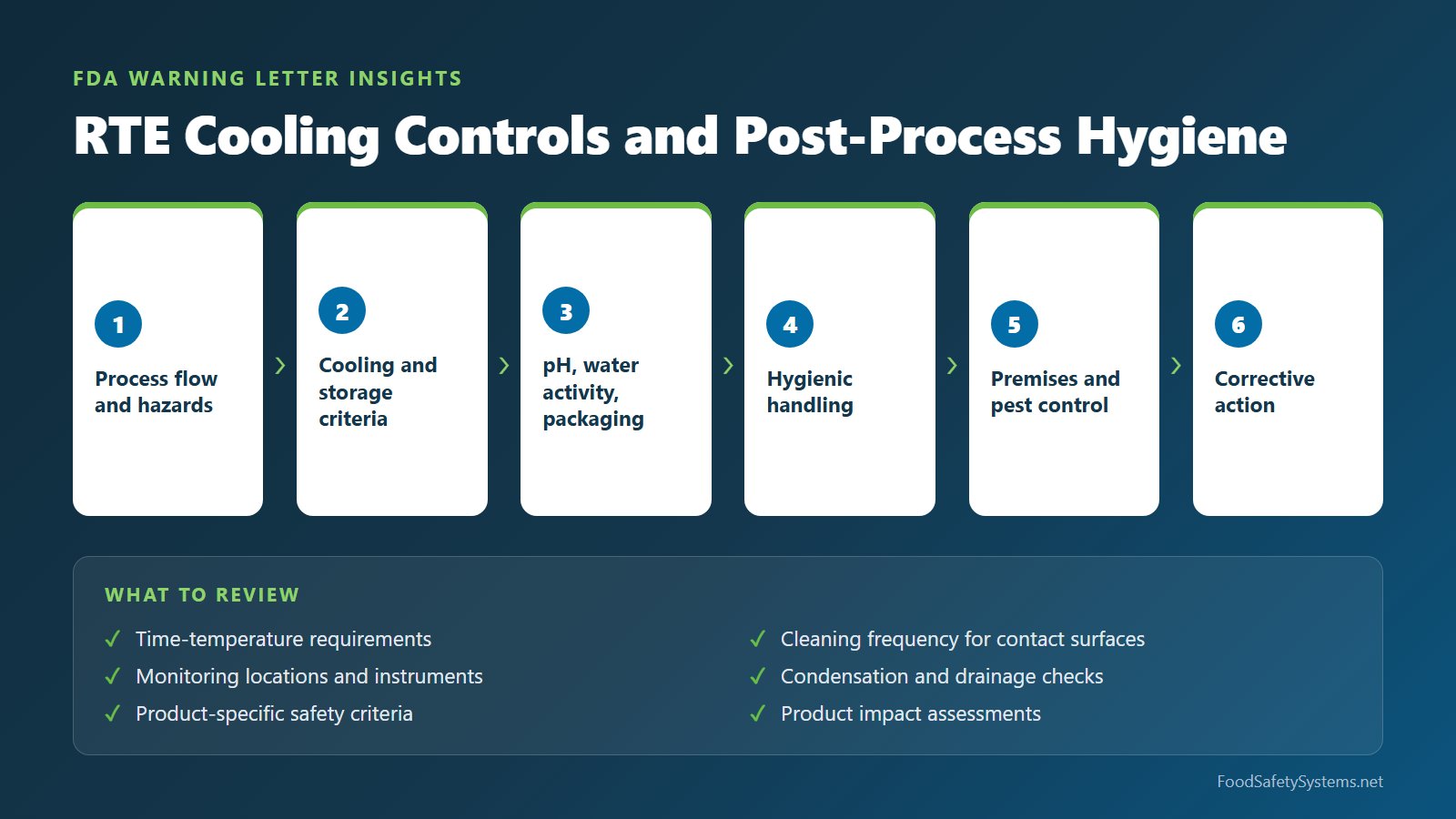
Key areas to review for RTE cooling controls and post-process protection
Review process flow and hazard analysis
Assess cooking, cooling, handling, packaging, storage, and distribution steps. Identify hazards that may grow, survive, produce toxins, or contaminate product after processing. Our guide on how to conduct a hazard analysis covers the method.
Set appropriate cooling and storage criteria
Establish scientifically supported time-temperature requirements for the product and process. Confirm that monitoring locations, frequency, instruments, and records demonstrate control. See temperature control measures and process validation.
Control pH, water activity, and packaging factors
Where product formulation or packaging is relied upon for safety, establish appropriate product-specific criteria and verification. Consider reduced-oxygen packaging risks where applicable.
Improve sanitation and hygienic handling
Ensure food-contact equipment, utensils, trays, and handling surfaces are cleaned and sanitized at appropriate frequencies. Prevent recontamination of cleaned equipment and exposed product. More in our cleaning and sanitation guide.
Establish environmental monitoring where warranted
Where environmental pathogens are a relevant hazard, define suitable sampling locations, frequency, target organisms or indicators, laboratory methods, response criteria, and trend review. See our environmental monitoring guide.
Maintain hygienic premises and pest control
Control condensation, overhead contamination risks, drainage, equipment condition, pest access, and cleaning practices. Ensure facility deficiencies are corrected at their source. Related guide: pest control program.
Demonstrate effective corrective action
Assess affected product, investigate root causes, implement corrective actions, and verify effectiveness through suitable records, inspections, monitoring, or testing. More on corrective and preventive actions.
How Consultare Inc. Group can help
Consultare can support BRCGS gap assessments, hazard analysis and food safety system review, cooling and process-control assessment, sanitation and environmental monitoring program review, hygienic practices assessment, pest and facility condition review, internal audit preparation, and corrective action planning. Recommendations should be aligned with the applicable BRCGS issue and site scope.
If you prefer to organize and manage your compliance activities yourself, you can also create a free SystemsBuilder account and begin building a structured system for your compliance documentation and processes.
Related insights: Listeria sanitation controls and hygienic zoning · Listeria environmental monitoring and positive-result response · GMP for ready-to-eat foods
Related services that support this topic
Depending on your facility, products and compliance needs, the following service areas may be relevant:
- BRCGS gap assessments and internal audits: review cooling, process control and post-process hygiene against applicable requirements.
- Food safety system development: set cooling criteria, monitoring records and sanitation procedures.
- Audit readiness coaching: prepare teams to demonstrate process and hygiene controls on the floor.
- Corrective action support: assess affected product and verify corrective action effectiveness.
Work with Consultare Inc. Group
Whether you are preparing for BRCGS certification, improving cooling controls, strengthening post-process hygiene, or addressing audit findings, discuss your site’s food safety risks, process controls, sanitation program, and improvement priorities with Consultare Inc. Group. Contact the team or book a free consultation. The right time to strengthen process controls, sanitation, and documentation is before a compliance gap becomes a business problem.
Technical sources and further reading
Editorial note: This content is educational. Specific requirements depend on product, facility, certification scope, and applicable rules.