Environmental pathogen control is a critical consideration for facilities handling exposed ready-to-eat foods. Effective Listeria sanitation controls depend on sanitation, hygienic design, environmental monitoring, supplier controls, and corrective actions working together as one food safety system. BRCGS-certified sites should evaluate these controls against the current applicable Standard and their product and process risks.
This article looks at the sanitation and site-condition side of Listeria control: how the site is zoned and cleaned, where contamination can enter from the facility or the supply chain, and how findings are closed out with evidence.
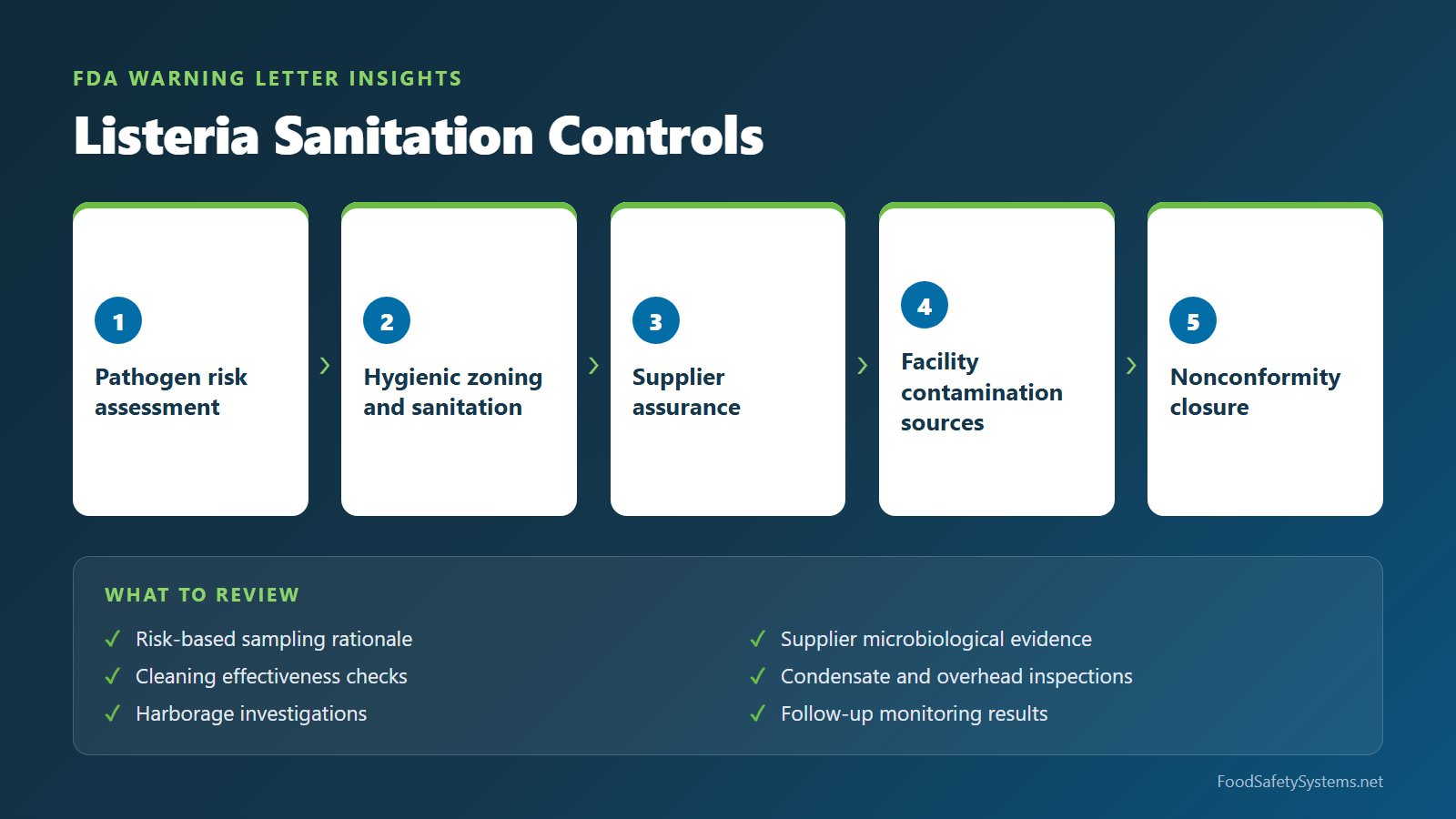
Key areas to review for Listeria sanitation controls
Review the hazard analysis and risk assessment
Identify environmental pathogen risks at relevant processing and post-lethality handling steps. Ensure the assessment reflects exposed product, process conditions, employee practices, and whether a later control step exists. Our guide on how to conduct a hazard analysis covers the approach.
Establish an effective environmental monitoring program
Define target organisms or indicators, sampling zones and locations, frequency, methods, laboratory arrangements, responsibilities, and actions for adverse findings. Use risk-based rationale rather than an arbitrary sampling map. See our environmental monitoring guide.
Improve hygienic zoning and sanitation
Review traffic patterns, equipment design, cleaning access, utensils, employee movement, and separation of high- and low-risk activities. Investigate potential harborage areas and verify cleaning effectiveness. Related guides: hygiene controls per production risk zone and cleaning and sanitation.
Strengthen raw material and supplier assurance
Ensure supplier approval and monitoring address relevant microbiological hazards. Verify that required controls are applied and supported by suitable evidence throughout the supply chain. More on supplier and raw material approval and monitoring.
Prevent contamination from the facility environment
Inspect condensate, overhead structures, refrigeration equipment, pipes, and other potential contamination sources. Protect exposed product and correct underlying facility conditions. See external and internal site condition.
Investigate and close nonconformities
Document containment, product impact assessment, root cause, corrective action, follow-up monitoring, and objective evidence of effectiveness. Our guide to corrective and preventive actions explains what that evidence looks like.
How Consultare Inc. Group can help
Consultare can support BRCGS gap assessments, food safety system development and review, hygiene and sanitation assessments, environmental monitoring program review, supplier and traceability program evaluation, internal audit preparation, nonconformity investigation, and corrective action planning. Recommendations should be mapped to the applicable BRCGS issue and site scope.
If you prefer to organize and manage your compliance activities yourself, you can also create a free SystemsBuilder account and begin building a structured system for your compliance documentation and processes.
Related insights: Listeria environmental monitoring and positive-result response · RTE cooling controls and post-process protection · GMP for ready-to-eat foods
Related services that support this topic
Depending on your facility, products and compliance needs, the following service areas may be relevant:
- BRCGS gap assessments and internal audits: identify hygiene, sanitation and environmental monitoring gaps before the audit.
- Food safety system development: build and review sanitation, zoning and monitoring procedures.
- Supplier verification support: evaluate supplier approval and microbiological assurance.
- Corrective action support: investigate nonconformities and document effective closure.
Work with Consultare Inc. Group
Whether you are preparing for BRCGS certification, addressing audit findings, strengthening environmental monitoring, or improving sanitation and supplier controls, discuss your site’s requirements, documentation, hygiene practices, and improvement priorities with Consultare Inc. Group. Contact the team or book a free consultation. The right time to strengthen your controls, documentation, and corrective action process is before a compliance gap becomes a business problem.
Technical sources and further reading
Editorial note: This content is educational. Specific requirements depend on product, facility, certification scope, and applicable rules.