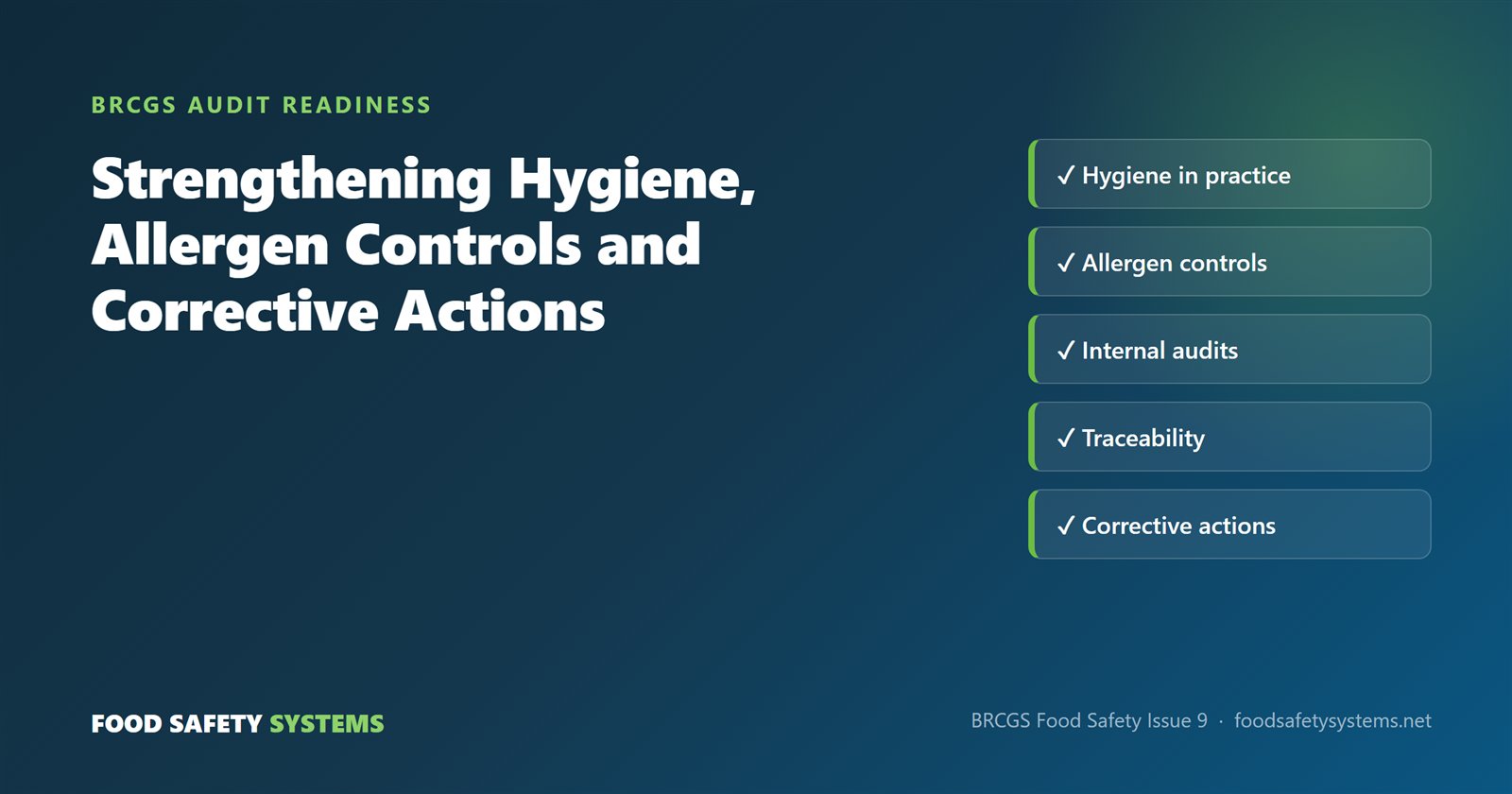
BRCGS audit readiness depends on operational discipline: the site must translate its documented system into consistent manufacturing practices. Hygiene, allergen prevention, personnel competency, equipment condition and corrective action follow-through are important areas for risk-based review. The applicable standard remains BRCGS Global Standard Food Safety Issue 9, together with any relevant effective position statements.
FDA Warning Letters: Lessons for BRCGS Food Safety Systems
FDA Warning Letters can highlight the consequences of food safety controls that are inadequately designed, implemented, or documented. Although FDA requirements and BRCGS Food Safety certification are separate frameworks, sanitation, allergen management, monitoring, and corrective action weaknesses can offer general lessons for BRCGS facilities. This article cites no individual enforcement recipient or case.
Consultare can help compare site practices with applicable BRCGS requirements, investigate causes of deficiencies, develop corrective actions, and verify their effectiveness. BRCGS certification support is distinct from resolving FDA regulatory obligations.
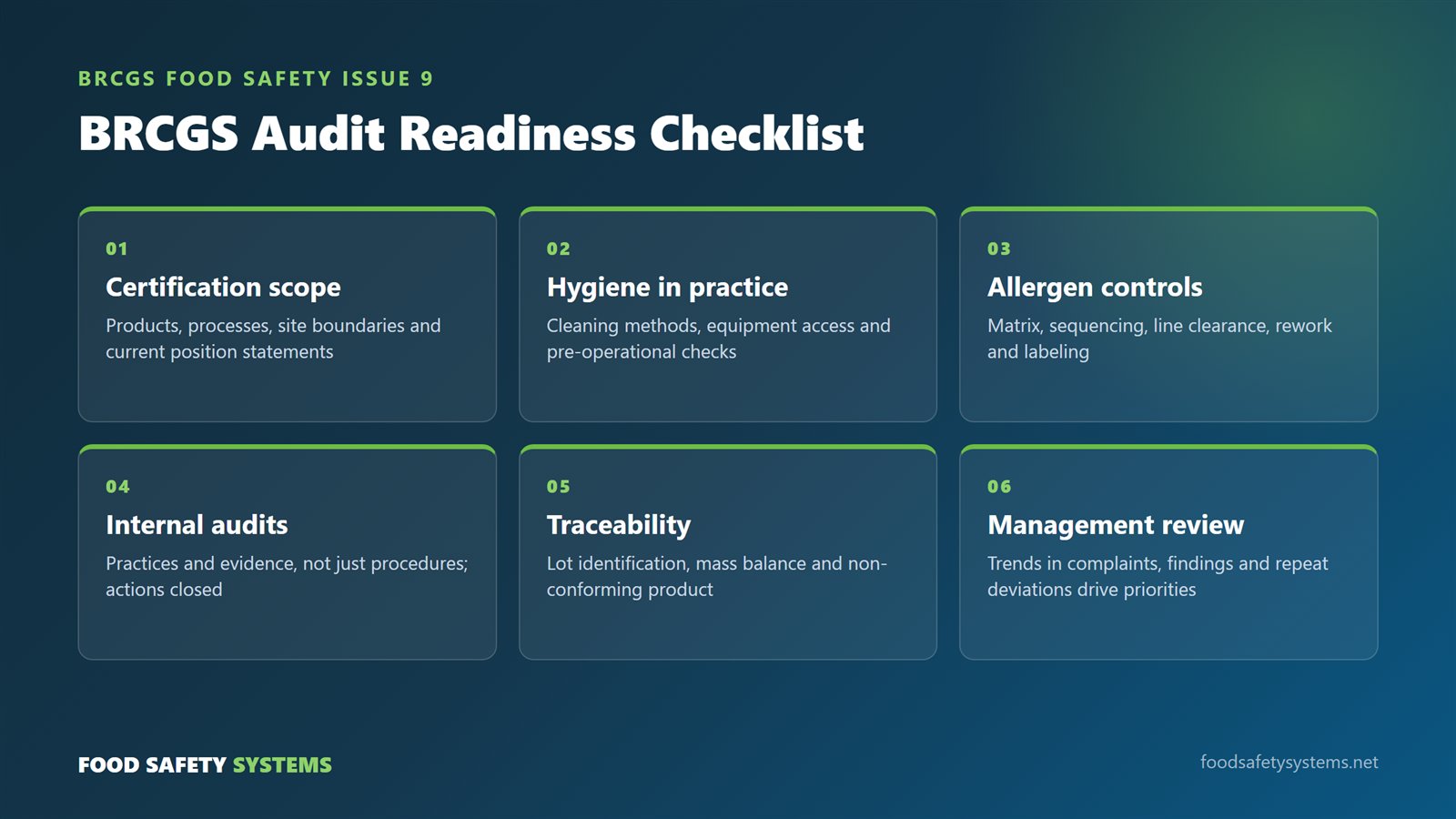
Six BRCGS Audit Readiness Checks
1. Establish the correct certification scope
Confirm the products, processes, site boundaries and applicable BRCGS Food Safety requirements before assembling an audit plan. Include the current BRCGS interpretation and relevant position statements issued for Issue 9.
2. Evaluate hygiene in practice
Walk through high-risk or high-care areas where relevant, equipment access, cleaning methods and pre-operational inspections. Verify that cleaning instructions are suitable for the products and machinery actually used.
3. Challenge allergen controls
Compare ingredient declarations with the allergen matrix, storage and handling practices, production sequencing, line clearance, rework and finished-product labeling. Focus on the pathways that could create unintended allergen presence. Our allergen management guide covers each of these controls.
4. Use internal audits to detect systemic issues
Audit actual practices and supporting evidence, not just the existence of procedures. Rotate coverage of shifts and operational activities when appropriate. Ensure corrective actions are recorded and followed to effective closure. See our guide to a risk-based internal audit program.
5. Strengthen traceability and product handling
Confirm that lot identification and mass balance exercises work across the site, including rework, returns and material transfers where relevant. Review how potentially nonconforming product is identified and controlled. More on traceability systems.
6. Connect management review to improvement
Look for patterns in complaints, inspection findings, environmental or hygiene trends, training needs and repeat deviations. Leaders should be able to show how risk information influences priorities and resources, as part of effective management review.
How Consultare Inc. Group Helps Resolve These Compliance Gaps
A compliance finding is not resolved simply by promising to revise a procedure. Consultare can help translate the issue into a practical, evidence-based improvement plan, with the exact scope agreed for the facility or importer.
Step 1: Diagnose the nonconformity
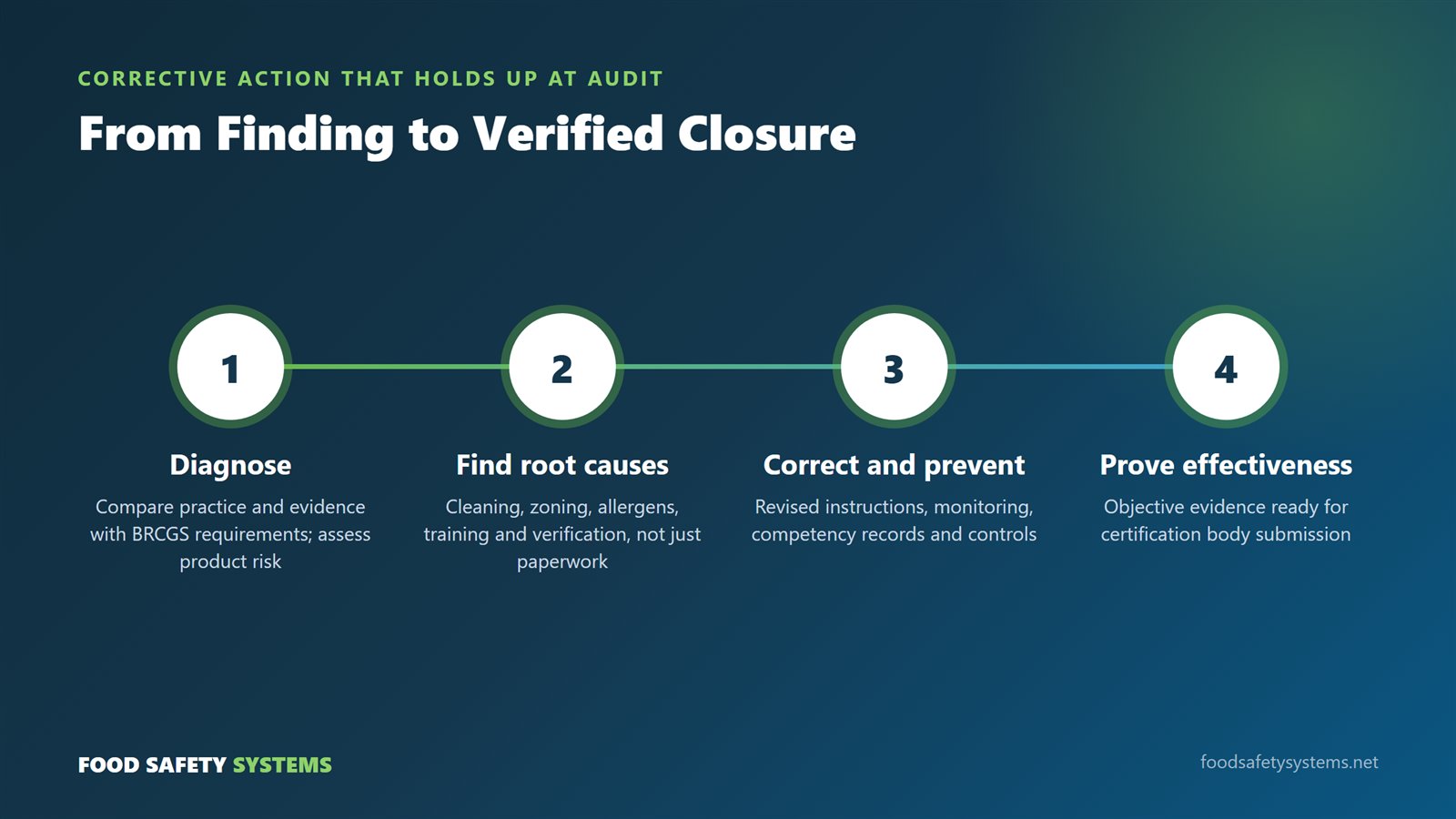
Compare the site’s operation and available evidence to applicable BRCGS Food Safety requirements and evaluate immediate product risk.
Step 2: Determine root causes
Investigate cleaning practices, zoning, allergen controls, training, verification and other relevant controls instead of merely rewriting procedures.
Step 3: Implement corrective and preventive actions
Support revised cleaning instructions, monitoring plans, competency records, verification and risk-appropriate control improvements.
Step 4: Demonstrate effectiveness
Review objective evidence and follow-up results and prepare the site for applicable certification body corrective action submissions.
Examples of Project Deliverables
- Audit-gap and root-cause summary
- Corrective action plan and updated control records
- Closure evidence and verification checklist
Consultare’s role: Provide technical assessment, recommended controls, implementation support and closure verification where included in the engagement. The regulated business remains responsible for its compliance obligations; consulting support does not guarantee FDA acceptance, a particular inspection outcome or certification.
Next step: BRCGS Readiness Services and Corrective Action Support. Request a scope-specific consultation.
Related Consultare Inc. Group Services
Consultare Inc. Group offers specialized assistance through its relevant service platforms. Depending on the engagement, related services include:
- BRCGS certification readiness and gap assessments
- Food safety system development and document review
- Internal and mock audits with corrective action support
- Hygiene, allergen management and sanitation program improvement
- FSQA and continuous compliance support
Discuss a BRCGS Readiness Assessment
Discuss the appropriate scope of support for your products, processes and regulatory obligations. Book a free consultation or contact our team.
Regulatory and technical note: Requirements differ by operation, product, standard edition and applicable exemptions. Verify current requirements and service scope before use.