Recall events involving meat and poultry products illustrate the consequences of weaknesses in ingredient control, sanitation, labeling and traceability. Although USDA FSIS enforces U.S. regulatory requirements, the broader lessons can help sites operating a BRCGS food safety system evaluate how effectively their procedures work, and make BRCGS recall prevention part of everyday operations rather than a paper exercise.
Why BRCGS recall prevention deserves attention
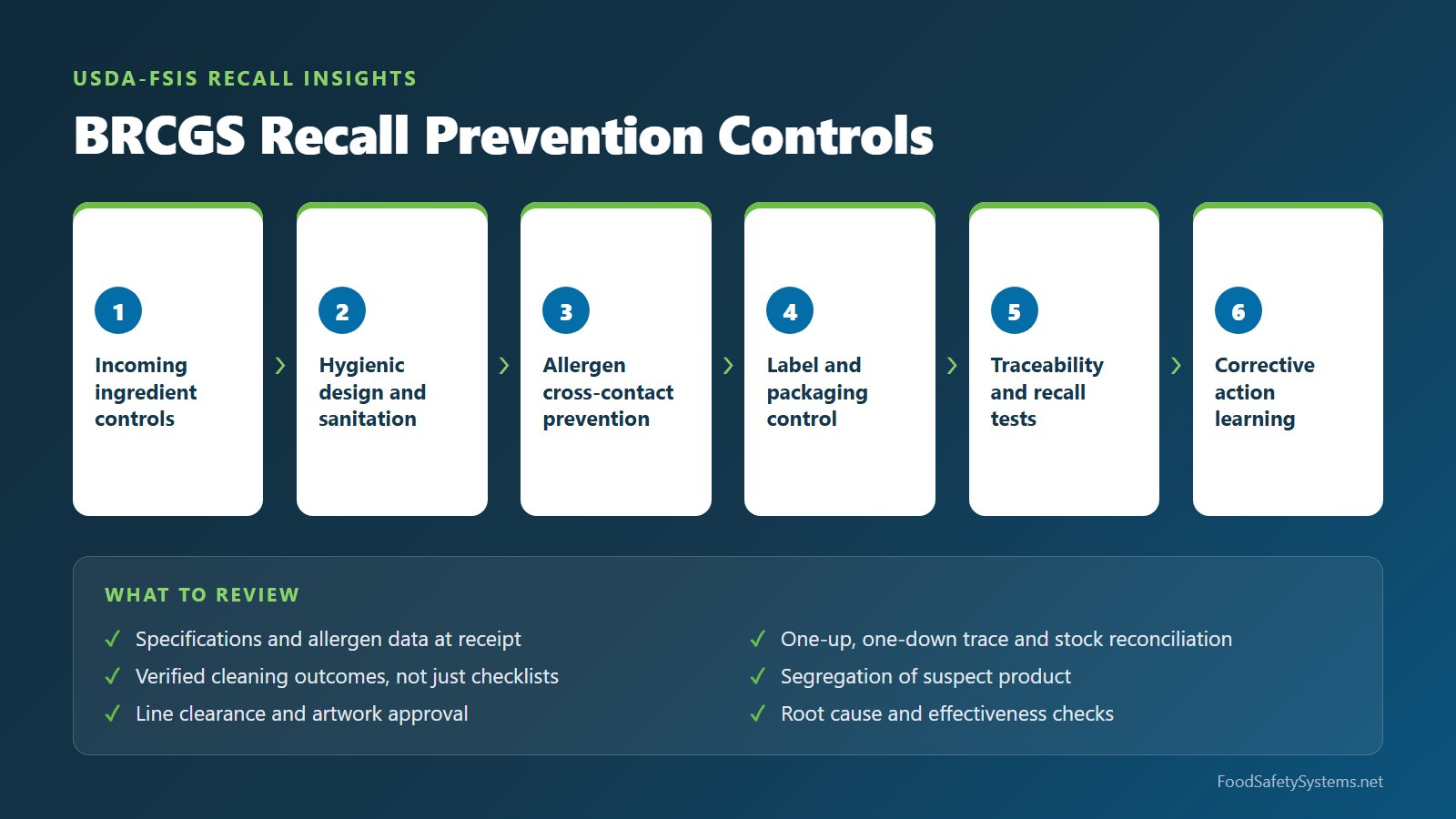
A recall rarely has a single cause. It usually traces back to a control that existed on paper but did not work in practice: an ingredient accepted without the right information, a cleaning task signed off without verification, a label applied without effective line clearance, or a trace that could not be completed quickly. The seven controls below are a practical place to start a review. For the response side, see our companion article on BRCGS food recall preparedness.
Practical controls to review
1. Incoming ingredient controls
Verify specifications, identity, allergen information and traceability at receipt. See our guides to supplier and raw material approval and monitoring and specifications for raw materials, packaging and finished product.
2. Hygienic design and sanitation
Inspect hard-to-clean areas and verify cleaning outcomes, rather than relying on completed checklists. Our cleaning and sanitation guide explains what documented cleaning and verification should cover.
3. Allergen cross-contact prevention
Assess shared equipment, rework and changeover practices. More on allergen management.
4. Label and packaging control
Require effective line clearance, artwork approval and start-up checks. See product labeling and start-up and changeover procedures.
5. Traceability and recall tests
Test one-step-forward and one-step-back tracing along with affected stock reconciliation. Our guide to traceability systems covers how to set up and test the trace.
6. Nonconformity handling
Identify and segregate suspect products until authorized disposition. See management of non-conforming products.
7. Corrective action learning
Use root cause analysis and effectiveness checks to prevent recurrence. More on corrective and preventive actions.
How Consultare Inc. Group helps turn gaps into solutions
- Assess: conduct targeted BRCGS gap assessments across hygiene, allergen, labeling and traceability controls.
- Develop: prepare prioritized corrective actions and improved management procedures.
- Implement: help sites strengthen operational checks, staff training and internal audits.
- Verify: support mock recalls, effectiveness reviews and audit readiness checks.
Whether you’re preparing for BRCGS certification, reviewing an existing system, addressing audit findings, or strengthening hygiene, allergen, traceability, and corrective action controls, you don’t have to manage the process alone. FoodSafetySystems.net helps food businesses assess, develop, implement, and improve food safety management systems aligned with applicable BRCGS requirements and their operational needs.
If you prefer to organize and manage your compliance activities yourself, you can also create a free SystemsBuilder account and begin building a structured system for your compliance documentation and processes.
Related services that support this topic
Depending on your facility, products and compliance needs, the following service areas may be relevant:
- BRCGS gap assessments and internal audits: review hygiene, allergen, labeling and traceability controls against applicable requirements.
- Food safety system development: improve management procedures, operational checks and supporting documentation.
- Corrective action support: prioritize corrective actions with root-cause analysis and effectiveness checks.
- BRCGS readiness services: prepare for certification with traceability testing and mock recalls.
- Audit readiness coaching: prepare staff to demonstrate controls in practice.
Work with Consultare Inc. Group
Schedule a BRCGS gap assessment or talk to us about your requirements, documentation, audit readiness, site practices, or corrective action priorities. Contact the team or book a free consultation. The right time to address it is before a compliance gap becomes a business problem.
Technical sources and further reading
Editorial note: This content is educational. Specific requirements depend on product, facility, certification scope, and applicable rules.