Food safety risks can enter a manufacturing operation through raw materials and ingredients, including hazards that cannot be detected by visual inspection. Fruit-based ingredients may require a mycotoxin risk assessment for hazards such as patulin. BRCGS-certified facilities should ensure that hazard analysis, supplier approval, specifications, incoming-material controls, and corrective action processes are suitable for the products and risks within their certification scope.
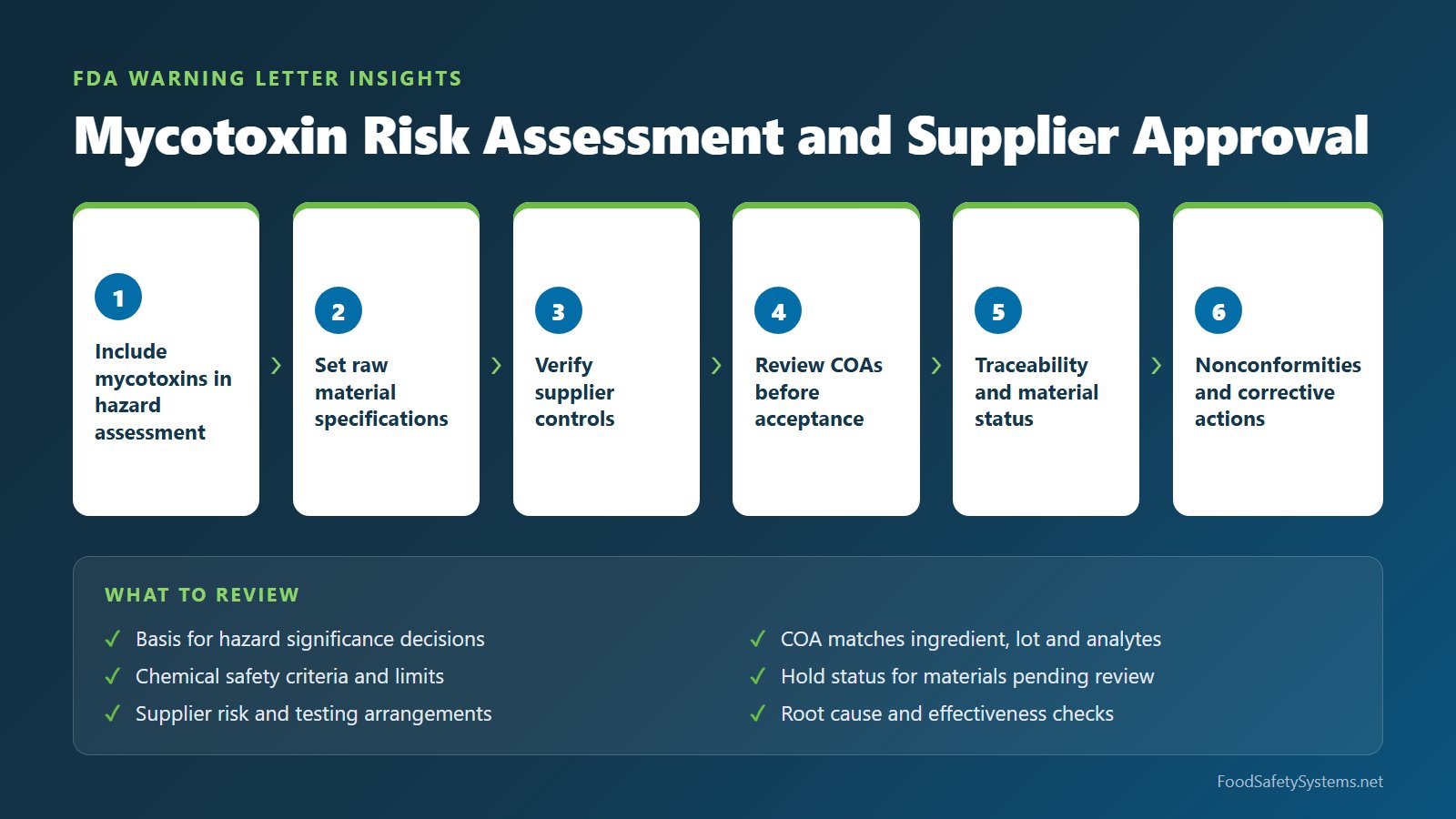
Key areas to review: from mycotoxin risk assessment to corrective action
Include relevant mycotoxins in hazard assessment
Evaluate whether patulin or other mycotoxins are relevant to the ingredients and products handled. Document the scientific and operational basis for hazard significance and control decisions. See our guides to conducting a hazard analysis and raw material hazard management.
Set clear raw material specifications
Identify applicable chemical safety criteria, testing expectations, acceptance limits, and supplier responsibilities. Ensure specifications are product-specific and communicated to suppliers. More on specifications for raw materials, packaging and finished product.
Verify supplier controls
Confirm that supplier approval and monitoring address relevant hazards. Review supplier risk, process controls, testing arrangements, changes, and performance history. See supplier and raw material approval and monitoring.
Review COAs before material acceptance
Establish a documented process to confirm that the certificate of analysis (COA) matches the ingredient and lot, includes relevant analytes and results, and meets defined acceptance criteria. Missing data should trigger a defined hold or escalation process where necessary.
Maintain traceability and material status
Ensure affected ingredient lots can be traced through production and finished-product distribution. Maintain clear status identification for materials pending review or approval. More on traceability systems.
Manage nonconformities and corrective actions
Investigate missing or unacceptable test results, determine product impact, identify root causes, and verify that supplier or internal corrective actions are effective. See management of non-conforming products and corrective and preventive actions.
How Consultare Inc. Group can help
Consultare can support BRCGS gap assessments, hazard analysis review, supplier approval and monitoring programs, raw material specification development, COA review procedures, traceability assessments, internal audit preparation, nonconformity investigation, and corrective action planning. Recommendations should be mapped to the applicable BRCGS issue and the site’s certified scope.
If you prefer to organize and manage your compliance activities yourself, you can also create a free SystemsBuilder account and begin building a structured system for your compliance documentation and processes.
Related services that support this topic
Depending on your facility, products and compliance needs, the following service areas may be relevant:
- BRCGS gap assessments and internal audits: review hazard analysis and ingredient controls before the audit.
- Supplier verification support: build supplier approval, monitoring and COA review into the program.
- Food safety system development: develop raw material specifications and incoming-material procedures.
- Non-conformance and regulatory response: investigate missing or unacceptable results and product impact.
- Corrective action support: plan supplier and internal corrective actions and verify effectiveness.
Work with Consultare Inc. Group
Whether you are preparing for BRCGS certification, reviewing raw material specifications, strengthening supplier approval, or improving COA review and traceability, discuss your site’s requirements, ingredient risks, supplier records, and improvement priorities with us. Contact the team or book a free consultation. The right time to strengthen ingredient controls, supplier verification, and documentation is before a compliance gap becomes a business problem.
Technical sources and further reading
Editorial note: This content is educational. Specific requirements depend on product, facility, certification scope, and applicable rules.