BRCGS Food Safety Issue 9 · Section 1.1
BRCGS Management Review Procedures: Plan, Run and Follow Up
Management review procedures keep your food safety and quality system suitable, adequate and effective. This guide covers what BRCGS Section 1.1 expects, five steps to run a structured review and the evidence auditors ask to see.
Requirement overview
What BRCGS Section 1.1 requires for management review
Section 1.1 of BRCGS Food Safety Issue 9 requires the site's senior management to have a system for reviewing the performance of the food safety and quality system at planned intervals, so it stays suitable, adequate and effective.
Management review is a structured process that keeps the system aligned with company objectives, compliant with BRCGS and responsive to internal and external changes.
Key compliance objectives
✓ Review food safety systems regularly and effectively
✓ Drive continual improvement based on performance data
✓ Promote cross-functional accountability and leadership engagement
✓ Keep documented evidence of all reviews and outcomes
Step by step
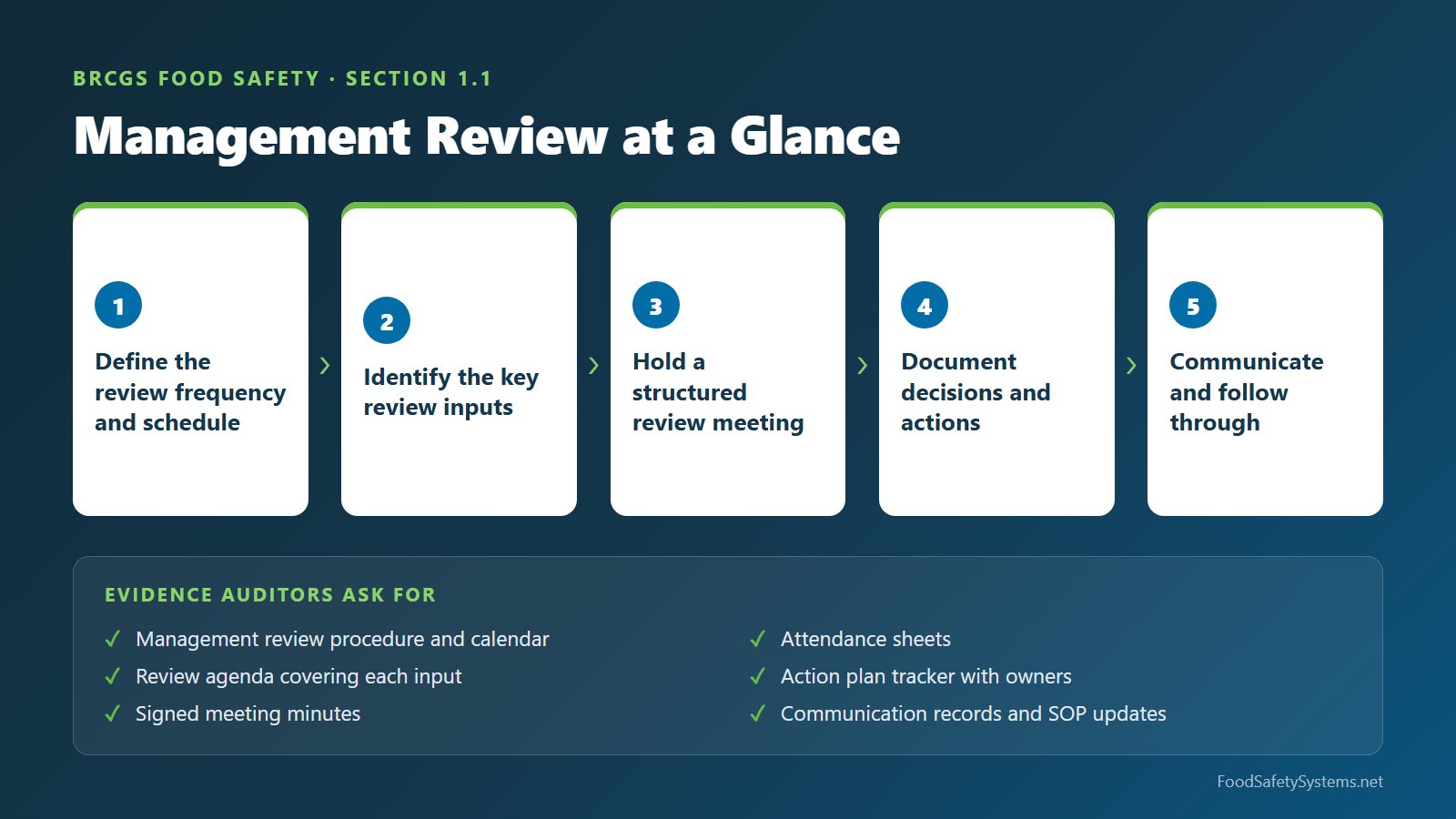
Five steps to effective management review procedures
Work through these steps in order. Each one lists what to put in place and the records that prove it works.
Step 1
Define the review frequency and schedule
What to put in place
✓ Hold reviews at planned intervals, such as quarterly, twice a year or annually
✓ Set the frequency to reflect business complexity, risk and previous performance
Evidence to maintain
✓ Annual review calendar with responsible parties
✓ Meeting invitations and attendance logs
Step 2
Identify key inputs to review
What to put in place
✓ Internal and external audit results
✓ Non-conformance and corrective action reports
✓ Customer complaints and feedback
✓ Food safety incidents or recalls
✓ KPI trends such as hygiene, training and supplier performance
✓ Regulatory updates and changes
Evidence to maintain
✓ Review agenda covering each input
✓ Data reports and supporting summaries
Step 3
Conduct the management review meeting
What to put in place
✓ Led by the most senior site manager or QA head
✓ Cross-departmental participation: QA, Production, HR, Supply Chain and others
✓ A structured agenda with clear discussion points
✓ Time for risk evaluation and decision-making
Evidence to maintain
✓ Signed meeting minutes
✓ Slide decks or handouts presented
✓ Attendance sheet and action items
Step 4
Document decisions, actions and improvements
What to put in place
✓ Opportunities for improvement
✓ Resource needs or approvals
✓ Food safety culture insights
✓ Updates to policies, procedures or objectives
Evidence to maintain
✓ Action plan tracker
✓ Assigned responsibilities and deadlines
✓ Follow-up meeting schedule
Step 5
Communicate and follow through
What to put in place
✓ Site-wide briefings or departmental updates
✓ Email summaries to key personnel
✓ Build changes into team goals or SOPs
Evidence to maintain
✓ Communication records or memos
✓ SOP or policy updates
✓ Training logs, if procedures are affected
Avoid nonconformities
Common management review audit findings and how to fix them
No formal management review process
Fix: establish a documented review procedure with defined intervals.
Missing key input data
Fix: standardize the required review inputs with templates.
No follow-up on action items
Fix: use a tracking system with deadlines and owners.
Limited leadership participation
Fix: involve all relevant senior managers and cross-functional leads.
Audit day
Auditor verification checklist
During an audit, be ready to show:
✓ Your management review procedure and schedule
✓ Full documentation of recent management reviews
✓ Review inputs: data reports, complaints and incidents
✓ Meeting minutes, action plans and follow-ups
✓ Communication of decisions and implemented changes
The benefit
Why management review matters
A well-run review does more than pass the audit:
✓ Gives visibility and accountability at leadership level
✓ Supports continual improvement and a responsive system
✓ Keeps you ready for audits and regulatory inspections
✓ Aligns departments on food safety priorities
Implementation roadmap
From a written procedure to continual improvement
Phase 1
Build your program
✓ Document a formal management review SOP
✓ Define inputs, responsibilities and review frequency
Phase 2
Train and execute
✓ Brief leadership on their role in management reviews
✓ Run reviews with structured agendas and data
Phase 3
Track and follow up
✓ Assign owners to action items
✓ Monitor progress and revisit unresolved issues
Phase 4
Improve continuously
✓ Update the review process based on performance
✓ Align outcomes with strategic goals and culture initiatives
FAQ
Management review questions
How often should a BRCGS management review take place?
At planned intervals, such as quarterly, twice a year or annually. Set the frequency to reflect your business complexity, risk and previous performance.
What inputs should a management review cover?
Internal and external audit results, non-conformance and corrective action reports, customer complaints, food safety incidents or recalls, KPI trends and regulatory updates.
Who should attend the management review?
The most senior site manager or QA head should lead it, with cross-departmental participation from areas such as QA, Production, HR and Supply Chain.
Related guides
More senior management commitment guides
Food Safety and Quality Objectives
Set the SMART objectives your management review tracks.
Read the guide →
Provision of Resources
Turn review decisions into budget, staff and equipment.
Read the guide →
Organizational Structure
Review roles and reporting lines as your site changes.
Read the guide →
Get your management review procedures audit-ready
We provide management review agenda templates, KPI dashboards and trend analysis forms, action tracking logs and follow-up forms, and leadership training modules on food safety governance.
Food Safety Systems is an independent consulting provider and is not affiliated with, endorsed by or certified by BRCGS or the British Retail Consortium. BRCGS® is a registered trademark of the British Retail Consortium Trading Ltd. For official requirements, visit www.brcgs.com. Read our disclaimer.