
BRCGS Food Safety Issue 9 · Section 3.5
BRCGS Supplier Approval Procedure for Raw Materials and Packaging
A documented supplier approval procedure keeps unsafe or non-compliant raw materials and packaging out of your site. This guide shows what BRCGS Section 3.5 expects, four steps to put it in place and the evidence auditors ask to see.
Requirement overview
What Section 3.5 requires from your supplier approval procedure
BRCGS Food Safety Issue 9, Section 3.5, requires that all suppliers of raw materials and packaging go through a documented approval and monitoring process, so they stay compliant with food safety, legality and quality requirements.
The procedure must make sure that suppliers of raw materials, including primary packaging, effectively manage risks to raw material quality and safety and operate effective traceability processes.
Supplier approval and ongoing performance monitoring protect the integrity of raw materials and help prevent food safety incidents.
Key compliance objectives
✓ Approve suppliers through risk-based assessments
✓ Monitor supplier performance through audits and verification
✓ Keep materials traceable to approved sources
✓ Document raw material specifications and testing
Step by step
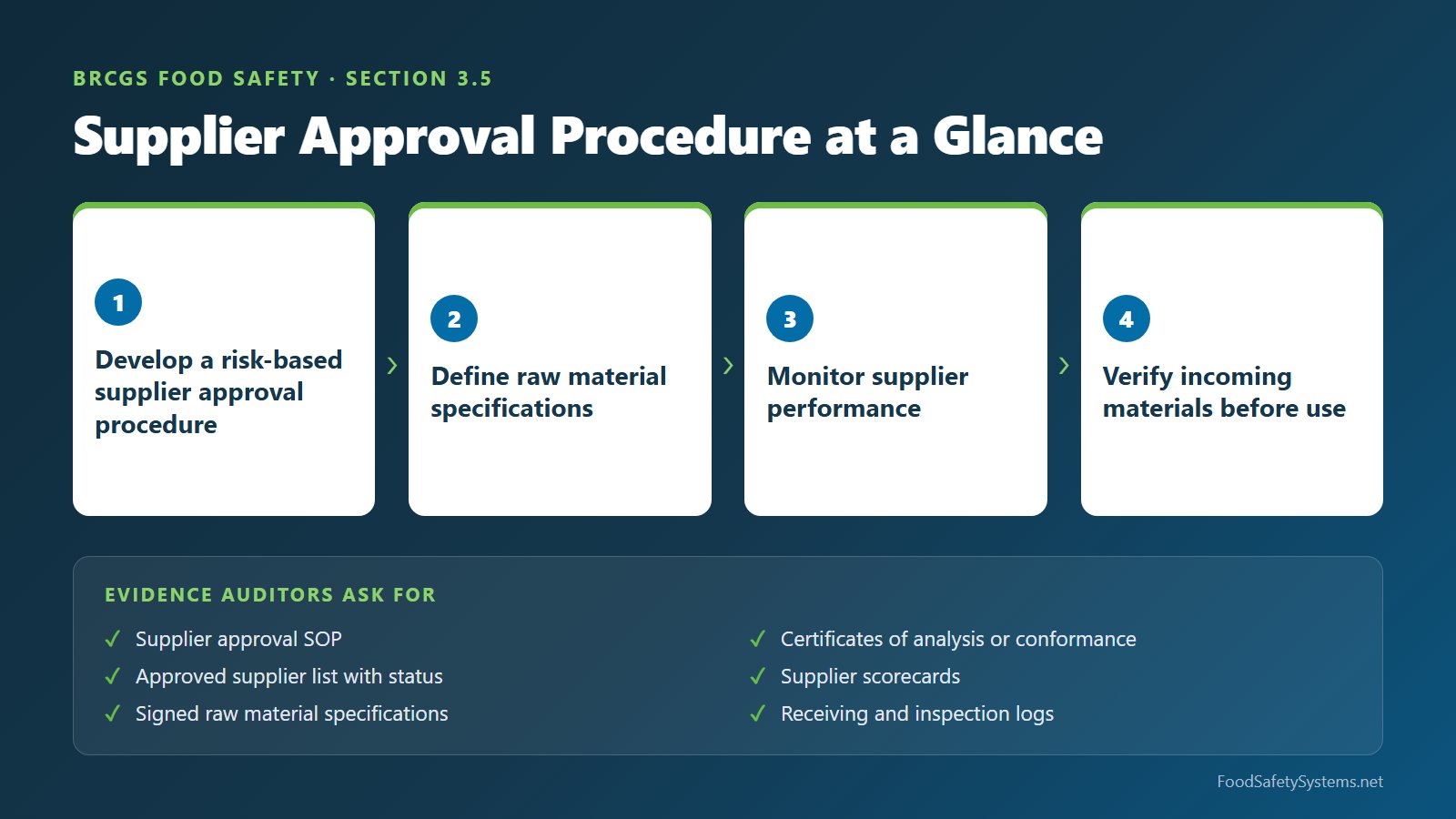
Four steps to approve and monitor suppliers
Work through these steps in order. Each one lists what to put in place and the records that prove it works.
Step 1
Develop a supplier approval procedure
What to put in place
✓ Risk assessment of each supplier and raw material
✓ Documented approval criteria, such as certifications, audits or questionnaires
✓ An approval status for each supplier: approved, conditional or not approved
Evidence to maintain
✓ Supplier approval SOP
✓ Completed supplier questionnaires or audit reports
✓ Approved supplier list with status and review dates
Step 2
Define raw material specifications
What to put in place
✓ Product description and technical data
✓ Food safety criteria, such as allergens, microbiological limits and chemical residues
✓ Packaging requirements and handling instructions
Evidence to maintain
✓ Signed, current raw material specifications
✓ Change control documents for specification updates
✓ Certificates of analysis or conformance
Step 3
Monitor supplier performance
What to put in place
✓ Regular supplier audits or performance reviews
✓ Review of non-conformances and corrective actions
✓ Monitoring of delivery performance, COAs and complaints
Evidence to maintain
✓ Audit or review schedules and reports
✓ Non-conformance and CAPA records
✓ Supplier scorecards or performance summaries
Step 4
Manage incoming material verification
What to put in place
✓ Physical inspection of incoming goods
✓ Sampling and testing of raw materials where required
✓ Approval before use in production
Evidence to maintain
✓ Receiving logs and inspection forms
✓ COA and COC verification logs
✓ Material release documentation
Avoid nonconformities
Common audit findings and how to fix them
No formal supplier approval process
Fix: implement a documented, risk-based supplier approval procedure.
Missing or outdated supplier documents
Fix: review and update approval records every year.
No performance monitoring
Fix: track complaints, delivery issues and food safety concerns.
No raw material specifications
Fix: write detailed specifications with food safety criteria and supplier sign-off.
Audit day
Auditor verification checklist
During a BRCGS audit, expect to present:
✓ A documented supplier approval and monitoring procedure
✓ A current approved supplier list with risk categories
✓ Raw material specifications with verification history
✓ Monitoring records, non-conformance logs and supplier performance data
The benefit
Why supplier approval matters
A working approval and monitoring program:
✓ Prevents unsafe or non-compliant materials coming in
✓ Ensures supplier accountability and traceability
✓ Shows strong control over your food supply chain
✓ Improves audit readiness and consumer trust
Implementation roadmap
From first risk assessment to continuous improvement
Phase 1
Build your program
✓ Create and approve supplier and material evaluation procedures
✓ Run an initial risk assessment for each supplier and material
Phase 2
Validate and monitor
✓ Approve suppliers based on audit, certification or documents
✓ Set material specifications and inspection protocols
Phase 3
Operate and track
✓ Verify incoming goods and review supplier performance
✓ Keep traceability to approved suppliers
Phase 4
Improve continuously
✓ Review supplier risk status every year
✓ Update approval and monitoring based on trends or incidents
FAQ
Supplier approval questions
Which suppliers does BRCGS Section 3.5 cover?
Suppliers of raw materials, including primary packaging. Each needs documented approval and monitoring to show it manages risks to material quality and safety and runs effective traceability.
What approval statuses should a supplier list use?
A common approach is approved, conditional or not approved, recorded on the approved supplier list with review dates.
How should incoming materials be verified?
By physical inspection of incoming goods, sampling and testing where required, checking COAs or COCs, and approving materials before they are used in production.
Related guides
More BRCGS management system guides
Specifications
Raw material, packaging and finished product specifications under control.
Read the guide →
Traceability Systems
Link product lots to raw materials, packaging and processing records.
Read the guide →
Document Control & Record-Keeping
Keep procedures, specifications and records current and controlled.
Read the guide →
Get your supplier approval procedure audit-ready
We provide supplier approval procedure templates, supplier audit and questionnaire forms, raw material specification templates, and supplier scorecard and performance monitoring tools.
Food Safety Systems is an independent consulting provider and is not affiliated with, endorsed by or certified by BRCGS or the British Retail Consortium. BRCGS® is a registered trademark of the British Retail Consortium Trading Ltd. For official requirements, visit www.brcgs.com. Read our disclaimer.